How to play jigsaw
Find the corners, connect the edges and build the picture inward. Learn the rules with a worked board, then try five practical tips with examples and exercises.
Your first three pieces
Step 1 of 4
Read the complete picture. Notice the buildings and the boundaries between colours.
Start with 16 pieces. Read the picture, place a corner, then follow a matching edge inward.
In the game, drag a piece and release slowly near its position, or select it and tap the square. A drop elsewhere on the board parks the piece; an off-board drop returns it to the tray.
Rules of the game
Match each fragment to its picture position
Each piece starts the right way up and seats only in its matching square. An on-board drag elsewhere leaves it loose; a tap on a wrong square is refused. Seated pieces are fixed; loose pieces can still be moved.
Start from a border position
An edge piece can seat in its correct border position without a neighbour. Flat sides tell you which side of the picture to check; they do not make every border position interchangeable.
Connect middle pieces to a seated neighbour
A middle piece needs a seated piece directly above, below, left or right. Diagonal contact and loose pieces do not count.
Keep the target square clear
A loose piece covering a square can block the correct fragment. Move it aside or return it to the tray. The picture is complete when every piece is seated.
Jigsaw tips
- Tip 1 · First move
Reading the picture
Read the reference and use a landmark to locate a fragment.
- Tip 2 · The frame
Corners and edges
Recognise flat sides and place a corner without a neighbour.
- Tip 3 · Connected pieces
Building inward
Work out which middle pieces can join your seated region.
- Tip 4 · Visual clues
Matching colour, lines and shape
Combine colour, texture, line direction and adjoining shapes.
- Tip 5 · Your workspace
Sorting and parking pieces
Reorder the tray and clear a square blocked by a parked piece.
Need the buttons, clock or room rules? Read Playing on Puzzled for Edges and layers, Shuffle, Hint and its 30-second penalty, saving and standings.
Pictures and piece counts
Piece count is the difficulty setting: 16, 25, 36, 49, 64, 81, 100, 144. The picture matters too. Strong landmarks and clear boundaries are useful starting points; repeated textures and broad low-detail areas give you fewer clues.
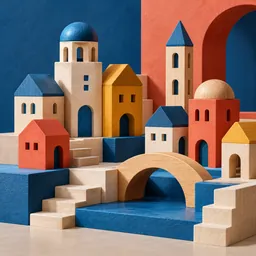
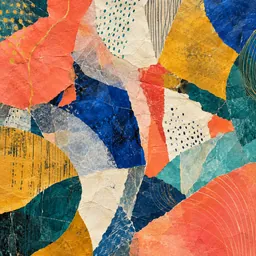


Four of 300 pictures. Choose a picture when creating a puzzle or series, or leave the selection empty for Surprise me.
Frequently asked
Ready to play?
No Jigsaw rooms are going right now — yours would be the first. Pick the board and the length, or take the defaults.